Blog
How Genuine Leather Ages Over Time: A Complete Guide

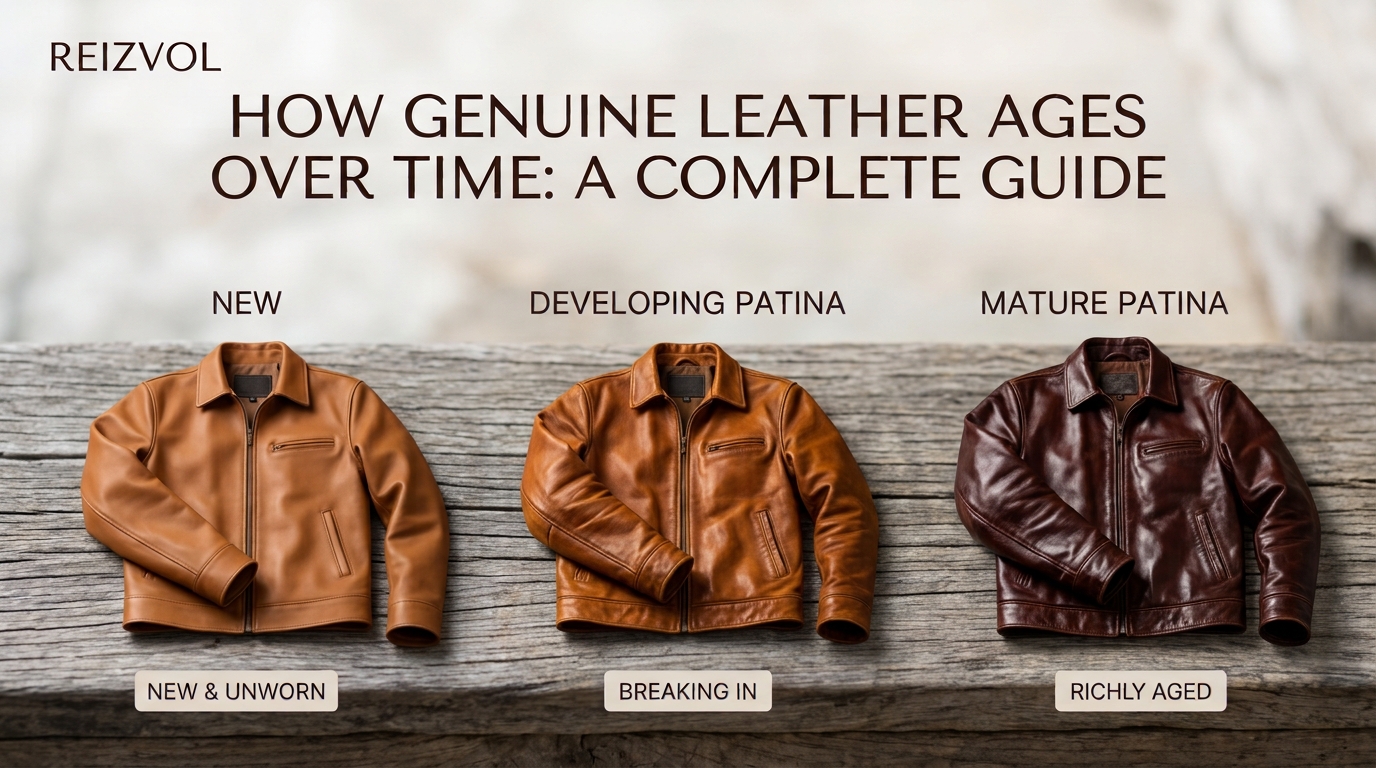
Genuine leather is one of the few materials that can become more beautiful with age. Understanding how genuine leather ages over time helps buyers appreciate its durability, natural character, and long-term value.
Unlike many synthetic materials, high-quality real leather can soften, develop a distinctive patina, and become more comfortable with regular use. Every crease, color variation, and polished surface tells a story, making each leather product unique.
At Reizvol, we believe that quality leather is more than a fashion choice. It is an investment in timeless style, lasting craftsmanship, and products that grow with their owners.
In this guide, we explore how leather ages, what affects its appearance, which leather types develop the best patina, and how to care for genuine leather so it lasts for years.
Why Does Genuine Leather Age Differently From Synthetic Materials?
The aging process of genuine leather begins with its natural fiber structure. Made from animal hide, leather responds to movement, friction, sunlight, moisture, and the oils transferred through everyday handling.
These factors gradually change the leather’s texture, flexibility, and appearance.
High-quality leather can develop several desirable characteristics over time, including:
- Natural softness: Leather often becomes more flexible and comfortable with use.
- Rich color variations: Certain leather finishes gradually darken or develop subtle tonal differences.
- Unique patina: The surface gains depth, character, and a natural sheen.
- Improved comfort: Leather products can adapt to regular movement and handling.
- Individual wear patterns: Creases and minor marks give each item a distinctive appearance.
Synthetic leather, by comparison, generally does not develop the same natural patina. Depending on its construction and quality, faux leather may eventually crack, peel, or lose its surface finish.
However, not all genuine leather ages in the same way. The quality of the hide, tanning method, surface treatment, and maintenance routine all influence the final result.
What Is Leather Patina?
Leather patina is the gradual development of color, texture, and sheen that occurs as leather ages and experiences regular use.
It is especially noticeable on high-quality, minimally coated leather. Over time, the surface may develop deeper tones, subtle highlights, and a softer appearance.
Several factors contribute to leather patina:
- Natural oils: Oils transferred through handling can affect the leather’s surface and appearance.
- Sunlight exposure: Light can gradually alter leather color, sometimes darkening or fading it.
- Friction and movement: Regular use polishes certain areas and creates distinctive wear patterns.
- Conditioning: Appropriate leather conditioners help maintain flexibility and reduce excessive dryness.
- Everyday experiences: Contact with clothing, bags, hands, and other surfaces contributes to the item’s individual character.
For many leather enthusiasts, a well-developed patina is part of the material’s appeal. Rather than looking identical to every other product, aged leather reflects its owner’s habits and experiences.
Important: Patina is not the same as damage. Natural color changes and minor creases can be desirable, while deep cracks, peeling, mold, and severe dryness indicate problems that require attention.
Which Type of Leather Ages the Best?
Leather quality plays an important role in how a product looks and performs over time. Full-grain, top-grain, genuine, and bonded leather differ in their structure and surface treatment.
1. Full-Grain Leather
Full-grain leather retains the hide’s natural grain surface. Because it has not been sanded to remove the outer grain, natural markings and variations remain visible.
High-quality full-grain leather is particularly valued for its durability and ability to develop a rich, distinctive patina. Its appearance changes naturally with use, making it a popular choice for premium jackets, bags, wallets, and accessories.
2. Top-Grain Leather
Top-grain leather has had its outer surface sanded or corrected to create a more uniform appearance. It can still be durable and age attractively, although its surface treatments may influence how much patina develops.
It is a good option for people who prefer a refined finish with fewer visible natural imperfections.
3. Genuine Leather
The term genuine leather can describe a broad range of leather products and does not automatically indicate a particular grade or level of quality.
Some genuine leather products age well, while others may show wear more quickly. The result depends on the hide’s quality, construction, tanning process, and finish.
When choosing genuine leather, look beyond the label and consider the manufacturer’s material specifications and product construction.
4. Bonded Leather
Bonded leather is made using leather fibers or scraps combined with binding materials. Its composition and surface coating differ from those of a continuous hide.
Although its initial appearance may resemble real leather, bonded leather typically does not develop the same natural patina. Its surface may crack, peel, or deteriorate as the material ages.
At Reizvol, we believe understanding leather quality helps customers make more informed decisions when choosing products designed for long-term use.
The Three Stages of Genuine Leather Aging
Leather changes gradually rather than following a fixed timeline. The speed and appearance of these changes depend on the leather type, frequency of use, environment, and care routine.
Stage 1: The Initial Break-In Period
During the first few weeks or months, leather begins to adapt to regular use.
You may notice:
- Slight softening and increased flexibility
- Small creases in areas that bend frequently
- A more comfortable fit in leather clothing
- Subtle changes in texture and surface appearance
These changes are often normal and help give leather its natural character.
Stage 2: Character Development
With continued use, leather may develop more noticeable variations in color, texture, and sheen.
Depending on the finish and environment, you might observe:
- Deeper or more varied color tones
- More visible natural grain
- A subtle surface sheen
- Creases and marks that reflect everyday use
This stage is when many leather products begin to look distinctly personal rather than brand-new.
Stage 3: Mature Patina Formation
Over several years, well-maintained leather may develop a more pronounced patina.
Common characteristics include:
- Richer-looking color variations
- A smoother or more supple feel
- Distinctive highlights on frequently handled areas
- A naturally worn appearance that reflects years of use
Not every leather product develops a dramatic patina. Heavily coated leather, for example, may retain a more consistent appearance throughout its life.
With suitable care, however, quality leather can remain attractive and functional for many years.
What Affects How Genuine Leather Ages?
Several environmental and practical factors influence leather’s appearance, durability, and flexibility.
Sunlight Exposure
Sunlight can gradually change leather color. Moderate exposure may create attractive tonal variations, but prolonged direct sunlight can cause fading, discoloration, and dryness.
Tip: Store leather products away from windows and intense heat when they are not in use.
Humidity and Temperature
Leather responds to its surrounding environment. Very dry conditions can contribute to moisture loss, while excessive humidity may encourage mold and mildew.
Tip: Keep leather in a cool, well-ventilated environment with reasonably stable humidity.
Frequency of Use
Regular use introduces friction, movement, and contact with other surfaces. These interactions help shape leather’s natural wear patterns and may gradually improve flexibility.
However, frequent use also exposes leather to sweat, dirt, moisture, and abrasion.
Tip: Allow leather products to air out after use and clean them when necessary.
Leather Quality and Finish
The leather’s grade, tanning method, and surface coating strongly influence how it ages. Minimally coated leather often shows more visible patina, while heavily finished leather tends to maintain a more uniform appearance.
Tip: Follow the manufacturer’s care instructions for the specific leather type.
Cleaning and Conditioning
Appropriate cleaning and conditioning can help prevent excessive dryness and maintain leather flexibility. Using unsuitable products, however, may cause discoloration, residue, or damage.
Tip: Choose products designed for your leather’s finish and test them on a small, inconspicuous area first.
How to Care for Genuine Leather as It Ages
Proper leather care helps preserve appearance, maintain flexibility, and extend the useful life of leather products.
1. Clean Leather Gently
Use a soft, clean cloth to remove surface dust and dirt. For more thorough cleaning, choose a leather cleaner suitable for the specific material and finish.
Avoid harsh household cleaners, excessive scrubbing, and unnecessary soaking.
2. Condition When Needed
Leather conditioning can help replenish moisture and reduce excessive dryness.
The ideal conditioning schedule depends on the leather type, climate, frequency of use, and manufacturer’s recommendations. Some products may need conditioning every few months, while others require it less frequently.
Avoid overconditioning, which can leave leather greasy or affect its finish.
3. Store Leather Properly
Store leather goods in a cool, dry, well-ventilated location.
For bags and accessories, breathable fabric dust bags can help protect against dust without trapping moisture. Keep leather away from direct sunlight, radiators, and other heat sources.
Use a suitable hanger for leather jackets and avoid compressing bags or folding items in ways that create permanent creases.
4. Protect Leather From Excess Moisture
Water can leave marks, affect color, or damage certain leather finishes.
If leather becomes wet, gently blot away excess moisture with a clean cloth. Allow it to dry naturally at room temperature.
Do not use a hair dryer, radiator, or direct heat to speed up the drying process.
5. Address Scratches and Marks Carefully
Minor surface marks can contribute to leather’s distinctive character. However, deeper scratches and stains may require specialist attention.
Avoid aggressive rubbing or applying oils and conditioners without checking whether they are suitable for the material.
6. Inspect Leather Regularly
Check leather products for excessive dryness, loose stitching, damaged hardware, or signs of mold.
Addressing small issues early can help prevent more extensive damage and keep products usable for longer.
These simple leather care habits can help maintain the beauty and function of quality leather for years.
Why Does Genuine Leather Become More Attractive With Age?
The appeal of genuine leather lies in its combination of durability, tactile quality, and individual character.
As leather develops natural wear patterns, it can become more distinctive than it was when new. This gradual transformation is one reason why people value leather jackets, handbags, wallets, and other accessories as long-term possessions.
Quality leather products may also support more considered purchasing habits. Choosing a durable item and caring for it properly can reduce the need for frequent replacements.
The benefits include:
- Longevity: Well-made leather goods can remain functional for many years.
- Timeless style: Classic leather designs often remain fashionable beyond seasonal trends.
- Individual character: Natural grain, creases, and patina make each item distinctive.
- Repair potential: Many leather goods can be cleaned, restored, or repaired by experienced professionals.
- Long-term value: Quality construction and maintainability can make a leather product worthwhile over time.
Actual lifespan and environmental impact depend on the materials, manufacturing process, product quality, usage, and care. Genuine leather is not automatically more sustainable in every circumstance, but buying durable goods and extending their useful life can help reduce replacement frequency.
Real Leather vs. Faux Leather: How Do They Age?
Real leather and faux leather can both offer attractive finishes, but their aging processes differ.
| Feature | Genuine Leather | Faux Leather |
|---|---|---|
| Patina development | Can develop natural patina | Generally does not develop authentic leather patina |
| Texture over time | May soften and become more supple | Depends on the synthetic material and construction |
| Appearance | Natural grain and individual wear patterns | Often more uniform, depending on the finish |
| Durability | Varies by leather quality and construction | Varies by coating, backing, and construction |
| Repairability | Many products can be repaired by specialists | Surface peeling and coating damage can be difficult to repair |
| Care requirements | Depends on leather type and finish | Depends on the synthetic material |
| Potential lifespan | Can last for decades with suitable care | Varies considerably by product quality and use |
Neither category has a guaranteed lifespan. High-quality construction, appropriate care, and usage conditions make a significant difference to how long a product remains in good condition.
The key advantage of quality leather is its potential to develop a distinctive appearance while remaining functional over time.
The Reizvol Philosophy: Timeless Leather and Lasting Quality
At Reizvol, we believe that great leather products should offer more than an appealing appearance when new. They should combine thoughtful design, material quality, and practical durability.
The natural aging process is part of what makes leather special. Over time, subtle changes in texture, color, and surface character can give a product a personal story.
By understanding leather quality and following appropriate care practices, customers can make informed choices and get more value from their leather goods.
Leather does not need to remain unchanged to remain beautiful. Its character can evolve with every year of use.
Final Thoughts: How Genuine Leather Ages Over Time
Understanding how genuine leather ages over time explains why quality leather remains popular among people who value durability, timeless design, and natural materials.
With regular use, suitable care, and the right environmental conditions, high-quality leather can become softer, develop a distinctive patina, and gain character. Full-grain leather is particularly valued for these qualities, although the results depend on the material’s finish and construction.
Whether you own a leather jacket, handbag, wallet, or everyday accessory, proper maintenance can help preserve its appearance and extend its useful life.
At Reizvol, we see the natural aging of leather as a celebration of individuality, craftsmanship, and enduring style.
Choose quality, care for it properly, and let your leather tell its own story.
Key Takeaways
- Genuine leather can soften and develop a distinctive patina over time.
- Full-grain leather often develops a more pronounced natural patina than heavily corrected or coated leather.
- The term genuine leather alone does not guarantee a specific quality grade.
- Sunlight, humidity, usage, leather finish, and maintenance all influence aging.
- Gentle cleaning, appropriate conditioning, and proper storage help preserve leather.
- Minor creases and surface variations can be natural, but cracking and peeling may indicate damage.
- Buying durable leather products and maintaining them properly can extend their useful life.
Frequently Asked Questions About Genuine Leather Aging
Does genuine leather get better with age?
High-quality genuine leather can become softer, develop richer color variations, and gain a distinctive patina over time. The results depend on the leather’s quality, finish, usage, and maintenance.
How long does genuine leather last?
Well-made and properly maintained leather products can last for decades. However, their lifespan depends on the leather type, construction quality, frequency of use, and environmental conditions.
What is leather patina?
Leather patina is the gradual change in a leather surface’s color, sheen, and texture through use and aging. It is particularly noticeable on certain high-quality, minimally coated leathers.
Does faux leather develop a patina?
Faux leather generally does not develop the same natural patina as genuine leather. Instead, its appearance may remain relatively uniform until the surface shows wear, cracking, or peeling.
How often should I condition genuine leather?
Conditioning frequency depends on the leather type, climate, and usage. Some products benefit from conditioning every three to six months, while others need it less often. Always follow the manufacturer’s instructions and avoid overconditioning.
Is full-grain leather the best type for aging?
Full-grain leather is widely valued for its durability and ability to develop a rich natural patina. However, the best choice depends on your preferred appearance, intended use, budget, and maintenance requirements.